










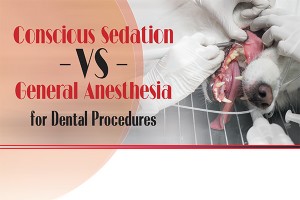
Conscious Sedation -vs – General Anesthesia For Dental Procedures
Click here to read the complete article
130 – October, 2025
 By Barbara E. Magera MD
Recently, my general veterinarian cleaned the teeth of my older Cavalier with mitral valve disease (MVD). His cardiologist evaluated him and felt his cardiac condition was stable with several medications. He provided recommendations for the procedure which I discussed with my vet. I advocated for conscious sedation (CS) but she wished to use a general anesthetic (GA). We discussed measures to follow since the GA agent, Propofol, frequently causes hypotension. I work in a human ICU where Propofol is routinely prescribed. Propofol-induced hypotension is an expected response that is generally managed with pressor agents (i.e., agents to maintain blood pressure) and/or intravenous IV fluids (IVF). If volume overload occurs following IVF, IV diuretics, such as Lasix or Bumex, are routinely given. With adequate diuresis or increased urination, congestive heart failure (CHF) symptoms generally resolve or at least improve.
A few days after the procedure my dog progressed into irreversible renal failure. Review of the records reveal that within minutes of IV Propofol, his blood pressure (BP) dropped to dangerously low levels. IVFs were not given because of the vet’s concern for volume overload with his underlying cardiac condition. Pressor agents to improve and maintain adequate BP are not routinely available in a general Vet office.
After the procedure, my dog appeared groggy. His BP was borderline low which the vet attributed to pain medications. I requested the IV remain in place. His condition markedly worsened over the next 24 hours. His urine output gradually declined to no urine output and he was no longer eating or drinking. Worse is that this occurred on a weekend when my vet’s office was closed. Calls to two Emergency Animal Centers were futile, as they declined any emergency cases for 48 hours.
My husband and I are both physicians who routinely care for human ICU patients. My dog had an IV in place, and I have access to IVF and IV Lasix. After speaking with my canine cardiologist, we administered both these agents several times, but unfortunately my dog’s condition did not improve.
Click here to read the complete article
130 – October, 2025

Short URL: https://caninechronicle.com/?p=340677
 Posted by AnthonyA
on Oct 15 2025. Filed under Current Articles, Featured.
You can follow any responses to this entry through the RSS 2.0.
Both comments and pings are currently closed.
Posted by AnthonyA
on Oct 15 2025. Filed under Current Articles, Featured.
You can follow any responses to this entry through the RSS 2.0.
Both comments and pings are currently closed.
Comments are closed