







A Failure to Understand Purpose-Bred Dogs
By Amy Fernandez
 I will preface this by saying I love the New Yorker. Its reputation for literary excellence is longstanding and well deserved, and the mainstay of that status has always been its gold standard fact-checking. On the other hand, fact-checking goes out the window when mainstream media encounters purebred dogs. Still, I honestly expected better from the New Yorker. You can check out the story, Oodles of Doodles, if you are so inclined.
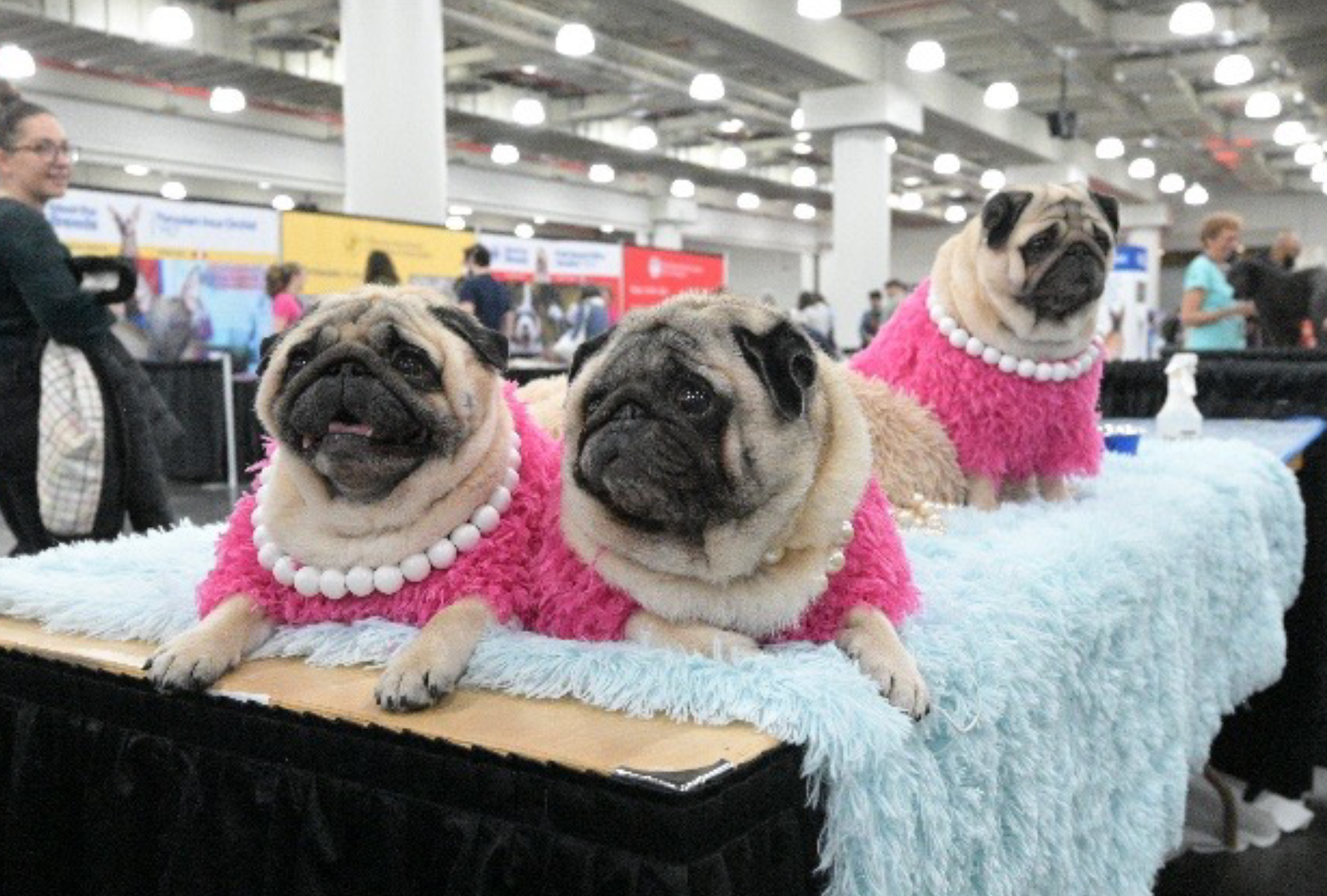
We’ve also come to expect relentless media hyperbole and nonsense following Westminster. That’s predictable. This story zeroed in on MTB, which followed the week after this year’s Westminster. The author cruised around the Javits, which featured most of the AKC-recognized breeds. Despite the frigid weather, it was packed, as usual. Right off the bat, he offered several observations that raised some questions.
- His first annoying statement was the overused contention that purebred dogs are selected solely for appearance. Come on. I’m starting to think that this obsessive rumination stems from comparisons to their own pets at home. Show dogs look great, moreover that is the tip of the iceberg.
- He also remarked that breeders were explicitly trying to sell puppies at MTB. I’ve attended this event more times than I can count, and no, that does not happen. Yes, breeders and clubs hand out contact info, but isn’t that the point of promoting purebreds?
- He also contended that when asked about what kind of dog he owns-a doodle- he received dismissive, patronizing reactions. He described it as a “vibe-killing question.” That seems equally unlikely, considering how many of us own rescues and mixed breeds along with our purebreds.
But my main point of rage was this remark, “Most of the animals at the show were designed for a purpose that no longer exists….” He offered the example of Otterhounds, one of the rarest breeds today, and went on to say that he encountered only one actual working dog at MTB. Ironically, MTB stages all kinds of working demos as part of the event.
Hey, maybe the working dogs were busy working that day rather than doing a public meet and greet. The point is that even someone completely unfamiliar with purpose-bred dogs has most likely been to an airport or a public event. Beagles, Labs, German Shepherds, and Malinois are just a few breeds employed in those jobs. They are a very visible presence in so many public spaces. The demand for police and detection dogs expands continuously, employing thousands of purebreds.
How could he have overlooked the most obvious job, Seeing Eye dogs? (German Shepherds were the first breed to do that job, and they are still at it.) Perhaps the author disagrees, but current estimates tell us that over half a million dogs now work in other disability-related jobs. They assist the deaf, the handicapped, predict the onset of seizures and blood sugar spikes, and perform so many other essential jobs. Remember the days before rapid Covid tests when detection dogs were on the frontline of virus detection? Yes, they were purebred dogs. And on that topic, what about therapy dogs? This has become an umbrella description for an ever-expanding number of canine jobs, and yes, most of them are purebreds.
A related comment in the article mentioned the obsolescence of Herding breeds. Really? Some of the earliest selective breeding was motivated by the importance of this canine job, and that remains equally true today. I will offer one notable case, the Great Pyrenees. For centuries, this breed was ubiquitous to its namesake region. Although it nearly died out in the twentieth century, it has rebounded dramatically because it remains the preeminent flock guardian breed. More than ever, they can be found doing their traditional work both in their homeland and here in the US. And what about all the Gundogs that ARE hunting. I recently had a conversation with someone extolling the value of his Duck Tolling Retriever. He chose the breed for that purpose, and it has surpassed his expectations. He’s now considering a Wirehaired Pointing Griffon because his hunting buddies rave about this breed. And what about sled dogs? They’ve been doing the same job since prehistory, and they remain indispensable.
So, I get it, this writer is pro-doodle. The part I do not get is why this preference inevitably translates into this obsessive anti-purebred rumination. Dogs make the world a better place. Why not agree with that and let it go? What are they really so worried about?
Short URL: https://caninechronicle.com/?p=356858
 Posted by Liz
on Apr 30 2026. Filed under Current Articles, Featured.
You can follow any responses to this entry through the RSS 2.0.
Both comments and pings are currently closed.
Posted by Liz
on Apr 30 2026. Filed under Current Articles, Featured.
You can follow any responses to this entry through the RSS 2.0.
Both comments and pings are currently closed.
Comments are closed