










The Big Apple Circus – A Different Kind of “Dog Show”
By Amy Fernandez
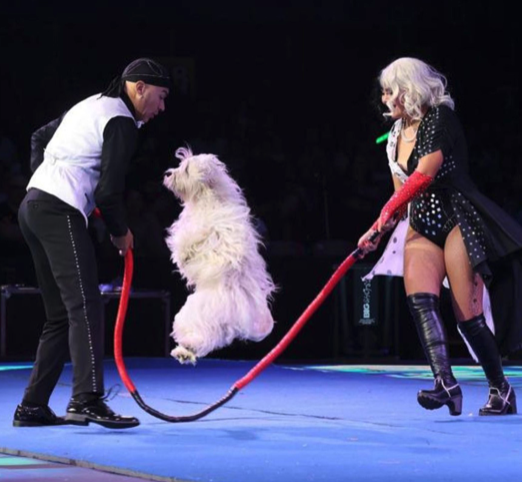
Credit: Big Apple Circus
There was a time when trick dogs featured prominently in the show scene. Profit was never guaranteed, and early show sponsors welcomed anything they could find to lure spectators through the door. Reporting on Westminster’s inaugural event in 1877, the Times described “a woman in fantastic attire amusing the spectators for some time with the antics of a dozen educated, ribbon-bedecked poodles.” By any measure, her act was a hit.
Unfortunately, these light-hearted diversions disappeared from shows. Once clubs were assured of public support and financial stability, entertainment like this was considered irrelevant. A different mentality dominated the game. For example, arbiters like AKC Gazette editor Arthur Fredrick Jones never concealed his distaste for dog show frivolity like those raucous Westminster fans up in the nosebleed section cheering, shouting, and enjoying the spectacle.
Personally, I think it was a mistake to derail that happy vibe. Although people love watching beautiful dogs, what they love most is seeing them in action. The enormous popularity of sports like Dock Diving and Agility illustrate this mainstream fascination. But don’t hold your breath while waiting for the return of trick dogs.
Thankfully, this type of canine talent has thrived, nonetheless. That brings me to the Big Apple Circus which has been a fixture of NYC’s holiday season since 1977. If you haven’t experienced it, you should. It’s not a traditional circus, but let’s stay on topic. Among the most popular acts is Juan Quiroz and his dogs. A third generation Chilean who grew up in the biz, it’s fair to say dog training is a family tradition.
Quiroz has been perfecting his act since 1998, and he currently manages a troupe of 14 ultra-talented dogs–mostly Miniature Poodles–plus one Yorkie. In a recent interview he explained his preference for smaller breeds. Along with the obvious logistical advantages, these breeds possess the light body weight and flexibility for some amazing stunts. His dogs almost take flight while leaping, climbing and performing acrobatics guaranteed to amaze anyone thinking they’ve seen it all. It also incorporates plenty of humor–and hey, anyone working with dogs knows that this is essential.
But the truly fascinating question is how he trains and coordinates all these dogs for a frenetic six-minute routine packed with so much action you don’t know where to look. He’s not sharing any trade secrets and there are plenty. His family has trained dogs professionally for three generations. To learn dogs in any respect–breeding, handling, trimming or training–intergenerational knowledge is the real deal.
Juan purchases his dogs from breeders. Explaining the obvious, he says well-bred dogs have the advantages of health and temperamental stability. This complex training regimen represents a major investment in time and energy. New dogs spend their first months as pets. He doesn’t commence serious work until they are a year old. From there, they have multiple, short, daily sessions. It takes about six months for a new dog to master the routine.
He cautions against overtraining. Trick dogs, like show dogs, get bored. Prior to a show, and they do two per day, they have one brief rehearsal–that’s enough. Then they hang out at home until showtime. He admits that occasionally dogs forget cues or improvise, but after a lifetime of working and living with them, he doesn’t get stressed. Some of their ad lib antics have been incorporated into the act. He did reveal one training secret, “You have to love them” and that’s probably the best tip any trainer can offer.
The Big Apple Circus is currently performing at Lincoln Center.

Short URL: http://caninechronicle.com/?p=346918
 Posted by Liz
on Dec 30 2025. Filed under Current Articles, Featured.
You can follow any responses to this entry through the RSS 2.0.
Both comments and pings are currently closed.
Posted by Liz
on Dec 30 2025. Filed under Current Articles, Featured.
You can follow any responses to this entry through the RSS 2.0.
Both comments and pings are currently closed.
Comments are closed