







Send Us Your #FormFollowsFunction Photos!
All dog breeds were bred to perform a specific purpose. We want to see our readers’ dogs doing the work they were bred to do to be shared on The Canine Chronicle!
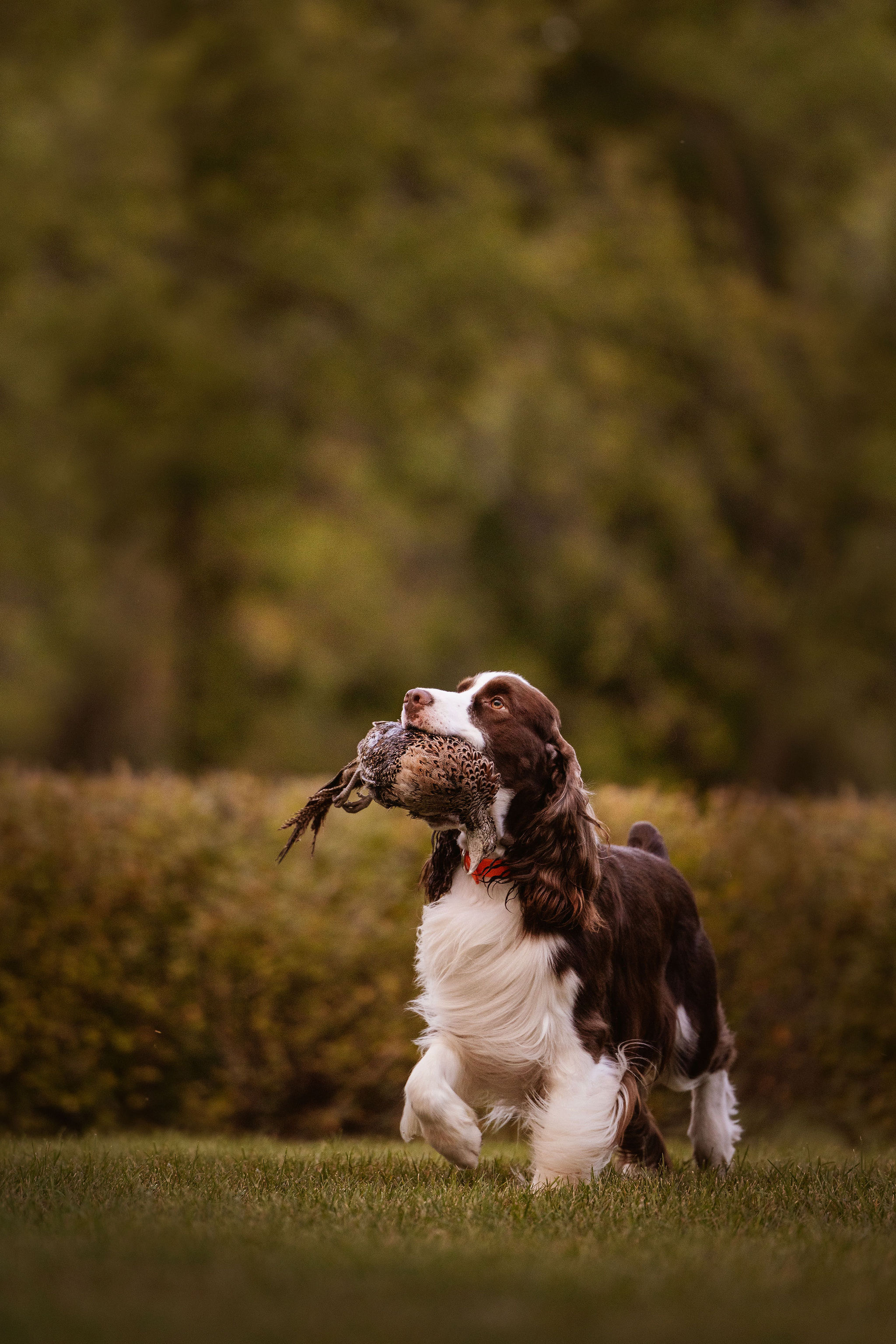
Thank you Laura Schreiner for sharing these Form Follows Function photo of your English Springer Spaniel, “Sparx,” (GCH CH MACH3 Vinewood’s The Fire Inside CDX BN RN MXG MJC MJG MFS TQX T2B3) doing what he was bred to do. Sparx is Laura’s very first purebred dog and they’ve accomplished all of his titles together. Laura is hoping to add a hunting title by the end of the year! According to the American Kennel Club, “The English Springer Spaniel is a sweet-faced, lovable bird dog of great energy, stamina, and brains. Sport hunters cherish the duality of working Springers: handsome, mannerly pets during the week, and trusty hunting buddies on weekends. Built for long days in the field, English Springer Spaniels are tough, muscular hunters standing 19 to 20 inches at the shoulder and weighing between 40 and 50 pounds. Springers move with a smooth, ground-covering stride. Bred to work closely with humans, Springers are highly trainable people-pleasers.
England’s springer-type spaniel first emerged centuries ago to work on upland game birds. Before the invention of the wheel-lock firearm in the 17th century, springing spaniels worked in tandem with hunters who brought down their quarry with nets, falcons, or bows, or some combination of these. After the hunting rifle revolutionized the sport, springers quickly earned a reputation as eager and reliable gundogs. The English Springer’s job is to detect game birds in high grass or bramble, flush or ‘spring’ the birds from their cover, then point and retrieve the downed bird. Breed literature tells us that Springers will work relentlessly all day in the field and then, in the words of one historian, ‘retire to the easy companionship of family, hearth, and home after a good day’s hunt.’ In recent years, the breed’s trainability, durability, and keen nose have been used to great advantage in K-9 detection work.”
Photo Credit: J. Klein Photos
Was your dog bred to hunt? Bred to herd cattle? Was he bred to rescue or guard? Was he bred to hunt rats? Please share your best Form Follows Function photos with us! We want to see them! Email Gia at Gia.Garofalo@caninechronicle.com with your photos!

Short URL: http://caninechronicle.com/?p=340826
 Posted by Gia
on Oct 8 2025. Filed under Current Articles, Featured, The Buzz.
You can follow any responses to this entry through the RSS 2.0.
Both comments and pings are currently closed.
Posted by Gia
on Oct 8 2025. Filed under Current Articles, Featured, The Buzz.
You can follow any responses to this entry through the RSS 2.0.
Both comments and pings are currently closed.
Comments are closed